

From Viking Steam to Floating Sauna Capital: The Story of Norwegian Badstue
By Stig Arild Pettersen, Secretary General, Norges Badstulaug – the Norwegian Sauna Association.
When international media descend on Oslo to write about the floating saunas moored along the harbor — in between the Opera House and the Munch Museum — they tend to frame it as a surprise. Something new.
But to understand what is happening in Norway right now, you have to go back a very long way. Because the story of Norwegian badstue culture is not the story of something new being invented.
It is the story of something being remembered.
What Is a Badstue?
Norwegians don't call our sweat bath a "sauna." We say badstue. The word tells the whole story: bad means bath, and stue — related to the old Norse stofa, directly connected to the English word "stove" — means a heated room. Badstue, then, means bath house. In old Norwegian, to bathe (bade) meant to cleanse yourself in steam. Immersing yourself in water had a different word: lauge.
The Finnish sauna and the Norwegian badstue are not borrowing from one another. They are siblings — two variants of a shared North Eastern European sweat-bathing heritage stretching across Finland, Norway, Sweden, the Baltics, Russia, Ukraine and more. No one country invented this. But no country has been as brilliant as Finland at preserving and promoting it, which is why the whole world now says "sauna" — in English, German, Italian, Japanese.
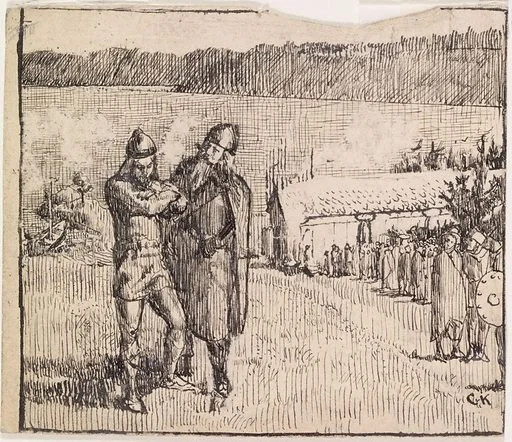
The Vikings Took Badstue
We cannot say precisely how long the badstue has existed. But we know the Vikings took badstue: there are several written tales of Norwegian Viking kings visiting the bath house. For all we know, a thousand years ago there was just as much badstue culture in Norway as there was sauna in Finland.
The best surviving description of medieval Norwegian badstue culture comes from an unlikely source: a Venetian nobleman. In 1432, Pietro Querini was blown off course in a storm and drifted all the way to Røst, a small island above the Arctic Circle. He stayed for three months and filed a meticulous report, in which he described how the islanders bathed every Thursday — men, women and children alike, walking naked together through the village and down to the bath house, as something simple, pure, and evidently long-established.
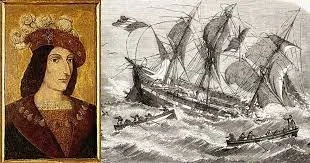
Pietro Querini
The 300-Year Disappearance
One hundred years after Querini's visit, Norway came under Danish rule. And roughly one hundred years after that, a single historical figure struck Norwegian badstue culture a blow from which it would take centuries to recover.
King Christian IV was a Lutheran puritan. Through a series of laws and commands, he effectively imposed a nudity ban. The communal bathing culture that Querini had witnessed — likely continuous since long before the Viking age — simply died. By the 1860s, a Norwegian ethnographer claimed to have found the country's very last practicing badstue bather, in a remote valley in Southern Norway, describing a habit that had become essentially unknown.
The buildings survived, repurposed for drying grain — still referred to as "the badstue" on the farm, still constructed, but no longer used for bathing. Norway was not entirely badstue-free. But it was badstue-culture-free, for roughly 300 years.
With two notable exceptions, of course: Finnish immigrants, the Kvens in the Arctic north and the Forest Finns in the southeast, today both recognized national minorities of Norway, brought their own sauna culture to Norwegian soil and kept Nordic sweat bathing alive.
The Hesitant Revival
Around the turn of the 20th century, hygiene had become a modern virtue. Cities acquired running water, but in the countryside the badstue again became the bath of the people — especially in the interwar years. Health and sanitation organizations developed prototype community badstuer in standardized sizes. By the 1950s, more than 900 non-profit community badstuer operated across rural Norway, with documented effects on public health. A research badstue was established at the Norwegian Institute of Technology in Trondheim, and Norway even hosted the first-ever international sauna conference in Oslo in 1947 – long before the International Sauna Association was established.
Then came running water — everywhere. By the 1960s, the badstue was seen as backwards and unnecessary. The culture had not had time to put down deep roots. Of those 900-plus community badstuer, we have so far located only five still in operation.
In the 1970s and '80s, Norway grew wealthy and basement badstuer became status symbols. Electric sauna heaters appeared in swimming halls across the country. But there was no culture to go with them — no knowledge of what a good badstue felt like. Most of those boxes ended up as storage. The public saunas in swimming halls were typically dry, metallic, poorly ventilated, often dirty. They put a generation of Norwegians off the whole idea. We are still fighting that legacy.
Two Accidental Sparks
Then, at the turn of the millennium, two things happened.
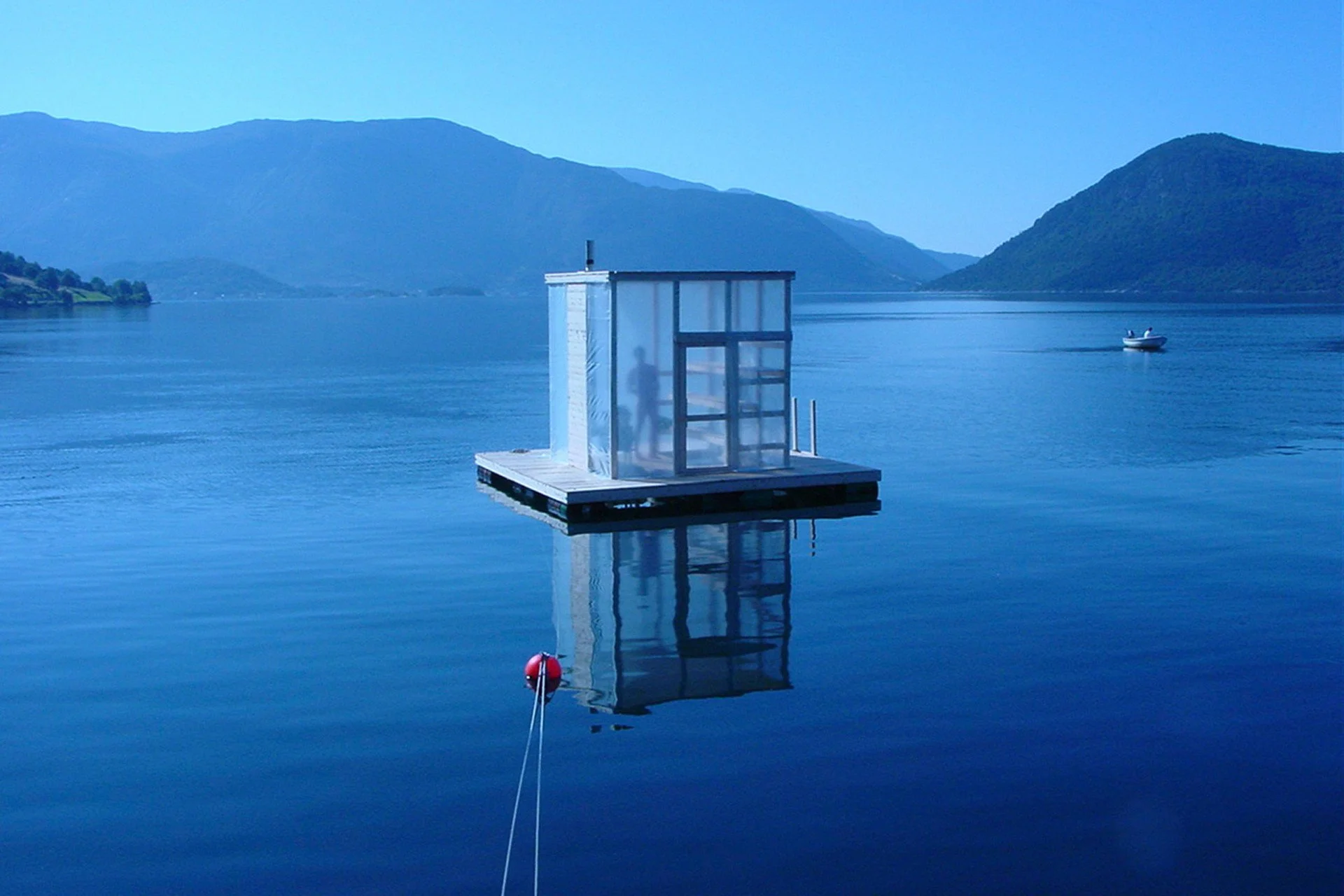
First: Finnish architect Sami Rintala, who had settled in Norway, built a simple floating sauna with transparent walls at a workshop in 1999 and had it towed out into the Hardangerfjord. It could stay there year-round thanks to the Gulf Stream, which keeps the entire Norwegian coastline nearly ice-free — a geographical coincidence enjoyed by no other country this far north. The project was shown in the Venice Biennale catalogue and drew significant attention.
Second: In Oslo a few years later, the winter bathing club of the Ministry of Foreign Affairs spotted an odd vessel near their dock — a rough-hewn floating badstue built from driftwood and salvaged windows by a group of anarchists playing cat-and-mouse with the city authorities. The diplomats offered their services in exchange for access. Funding followed, and the first architect-designed floating public badstue in Norway was commissioned. The Oslo Sauna Association was born. Today it operates around 30 saunas across seven locations, with 20,000 paying members and more than a quarter of a million visitors annually.
Why the Boom?
Hundreds of public saunas have since appeared across Norway — floating and on land, in cities and in wilderness. Norges Badstulaug now counts more than 220 sauna operators among its members, running at least a thousand public saunas that together receive around two million guests per year in a country of five million people.
Several forces converged to make this happen. Norway's culture of friluftsliv — outdoor life — had primed people to be outside in all seasons; the new saunas, placed in extraordinary natural settings with large windows, became a new way of doing that. Instagram amplified the landscapes and the cold-plunge ritual. Crucially, the new saunas were mostly built by people who actually understood badstue — who cared about the heat, the stones, the steam — giving people, many for the first time, the experience of a genuinely good one. Architects discovered that a sauna was the perfect small project to experiment boldly. Floating saunas often circumvented strict coastal building regulations. The COVID-19 pandemic accelerated a wave already building. And global wellness trends, aufguss culture, and Norwegian tourism authorities who recognized that striking nature saunas were social-media gold, all played their part.
And perhaps something harder to name: a kind of collective memory. Norway was a badstufolk — a sauna people — for centuries before Christian IV intervened. When conditions aligned, perhaps something deeper than trend was at work.
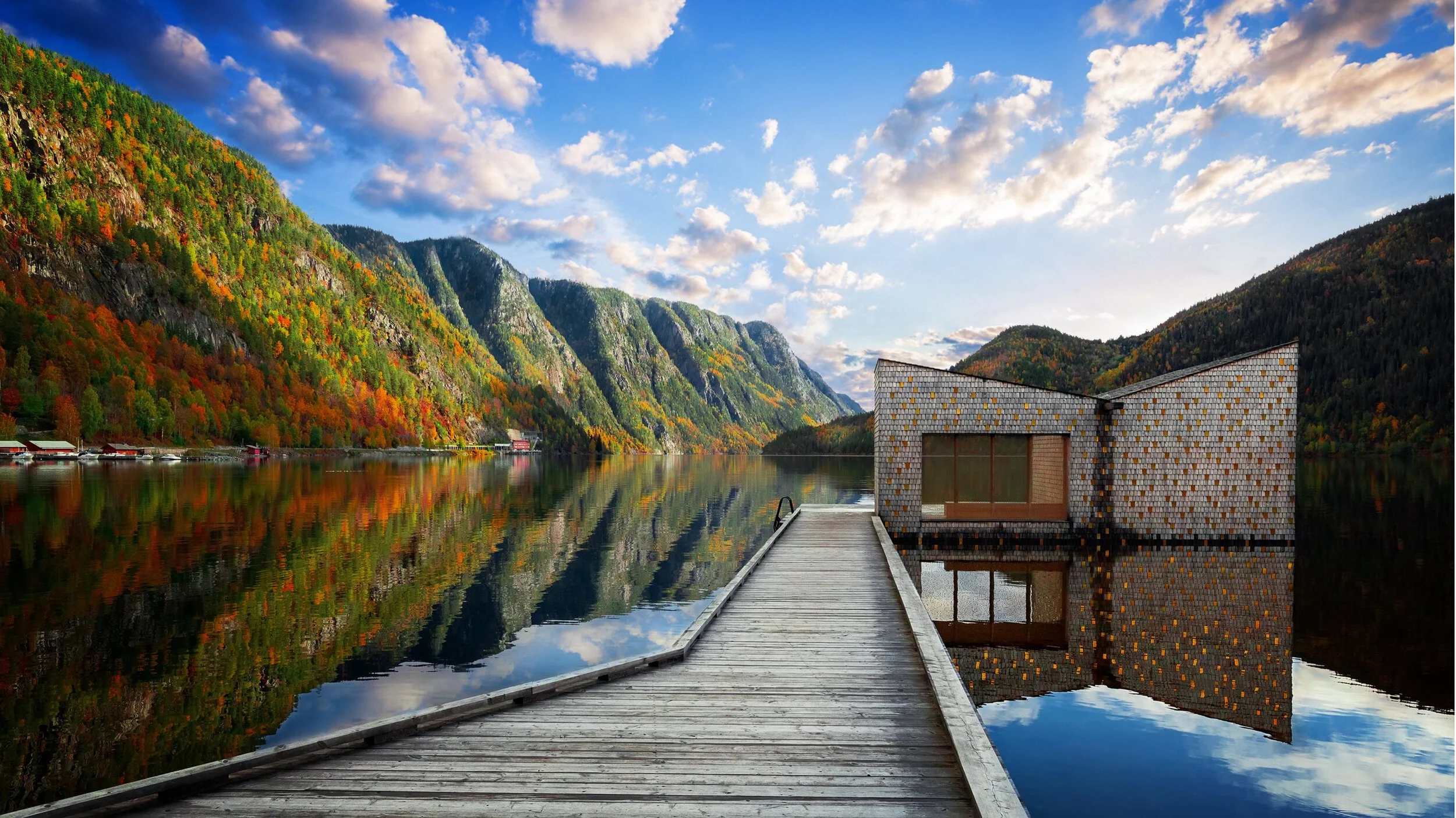
Soria Moria sauna in Telemark, Norway
The Clean Slate Advantage
There is an unexpected gift inside the story of the 300-year disruption. Because Norwegian badstue culture was effectively erased and had to restart, it carries no orthodoxy. There are no unwritten rules about the right and wrong way. No sense that one ritual or architecture is the only legitimate one.
This gives room to play. Architects experiment. Operators invent rituals. The book Badstufolk, published in 2021 by Knut Lerhol and Hallgrim Rogn, captures this spirit perfectly: find your own way, and here is how to find a better experience. It has become the modern Norwegian badstue bible.
This openness may be one reason why the global sauna boom happening right now — in the UK, the US, Canada, Australia and other places — looks more like what has been happening in Norway than like a replication of Finnish sauna culture. Nature-based, architecturally ambitious, socially accessible public saunas: this is the Norwegian model.
Come to Oslo in September
All of this history, and the living culture it has produced, is the backdrop for what will happen in Oslo from 24–26 September 2026.
The XIX International Sauna Congress — organized by Norges Badstulaug — will bring together more than 500 participants from across the global sauna community in the city that one Finnish newspaper described as "challenging Helsinki as the sauna capital of the world."
On the evening of Friday, September 25th — the Floating Sauna Night — the congress moves onto the water itself, with communal bathing at Oslo's iconic floating sauna villages. In Oslo, this is simply part of city life. The congress is your chance to experience it from the inside.
The history that brought us here is long and unlikely: a Venetian merchant who got lost at sea; a king who banned nudity; five community saunas surviving out of nine hundred; a Finnish-Norwegian architect taking advantage of the Gulf Stream; anarchists and diplomats sharing driftwood. And somewhere beneath it all, a people finding their way back to something that was always theirs.
We will see you on the water.

The XIX International Sauna Congress takes place September 24–26, 2026 in Oslo, Norway.